When I was a young man, I'll never forget a statement my dad made after the September 11th attacks on the World Trade Center and the Pentagon.
At the time, my mom's side of the family had us over for dinner every Tuesday night. It was me, my older brother and my dad headed to my maternal grandmother's (Nan) house for dinner with her and my maternal grandfather (Pap).
My maternal grandfather was brought up in the era of the Korean conflict and was literally too short to serve in the military and was given an honorable discharge before serving in the conflict. My dad's side of the family has one cousin that served in Desert Storm as a member of a logistical company that was outside of the front lines.
There we sat at my Nan and Pap's house watching the evening news and my dad never was all that talkative around current events but that night they were providing coverage of the conflict in Afghanistan known as Operation Enduring Freedom.
Of course, we had yet to find the hideout of Osama bin Laden but we had seen the video of our bunker busters blasting out caves in the mountains of Tora Bora. While watching some of those clips on the news, he said something that seemed incredibly outlandish at the time but rings truer and truer but the day.
I think the Arabs are just trying to bankrupt us. We spend millions on missiles, they use rocks and set oil fields on fire. We are playing a different game.
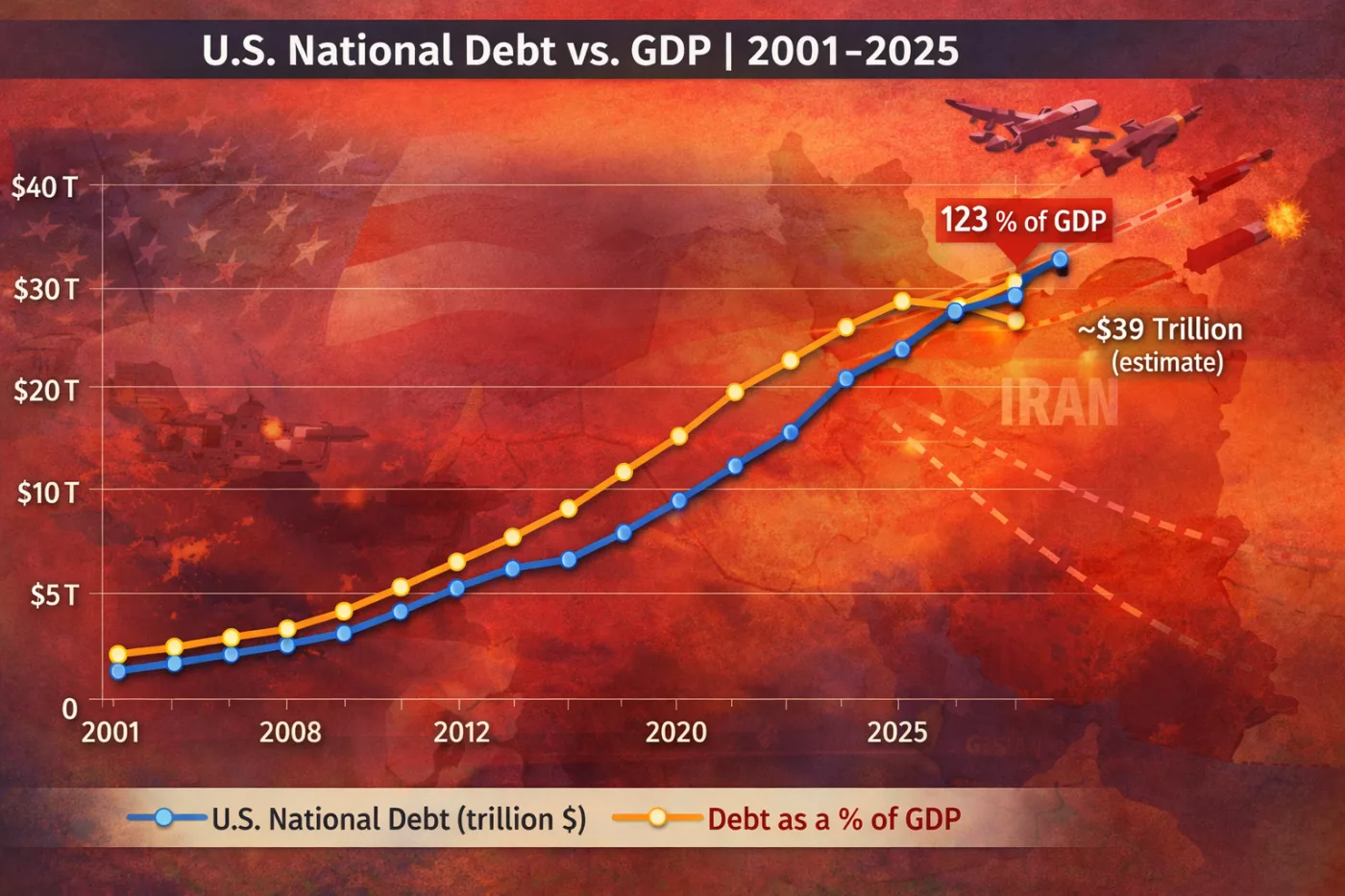
We all looked at him and said that's nuts there's no way they can bankrupt us. At the time, we really had just come out of some of the best years the economy had seen and the balanced budget years of Bill Clinton. The national debt stood at 6.2 trillion dollars when my dad made that statement in 2002.
Over the next 19 years we would spend 2.3 trillion dollars on that war in Afghanistan. We spent 2.89 trillion dollars in Iraq. Two wars nearly doubled our national debt on their own, and we left barely any better off than we were before 9/11.
As of the moment of this post, the national debt stands at 38.83 trillion dollars.
In modern warfare, things are no longer about the high ground. Outspending your adversary is also not the formula for success. We drop multi-million dollar missiles or spend millions on each missile to shoot down a 20,000 dollar drone. The economics of this type of conflict do not weigh in the favor of the higher spending party.
While the United States is doing heavy damage in Iran, the Iranians have shut down the Strait of Hormuz and have attacked eight different countries in the Middle East. The shipping lanes in the Persian Gulf are coming to a halt and oil has increased nearly $10/barrel since the start of the conflict. The United Arab Emirates has ceased production of Liquified Natural Gas (LNG).
It's possible that we get oil from Venezuela now that Iran has closed down 20% of the world's supply from the Persian Gulf region. However, that oil is not the same in Venezuela and requires a higher amount of refining.
Certainly, we could also end this conflict in a few days as opposed to a few weeks but it would appear to be a growing conflict that will encompass multiple Middle Eastern nations fighting on the side of the US/Israel and the proxies of Iran will continue to inflict damage across the entire region.
As recently as today, the idea of US ground troops entering the conflict was mentioned as a real possibility. The reality of the situation is that boots on the ground will most likely be required. You can't bomb your way to victory, there will be real pain during this conflict and unfortunately there will be more troops that don't come home.
The servicemen and servicewomen fighting this conflict aren't as easy to put a dollar and cents value on, but they are the real value and lifeblood of the nation. How long will we tolerate this conflict halfway across the world while we have growing problems on the home front?