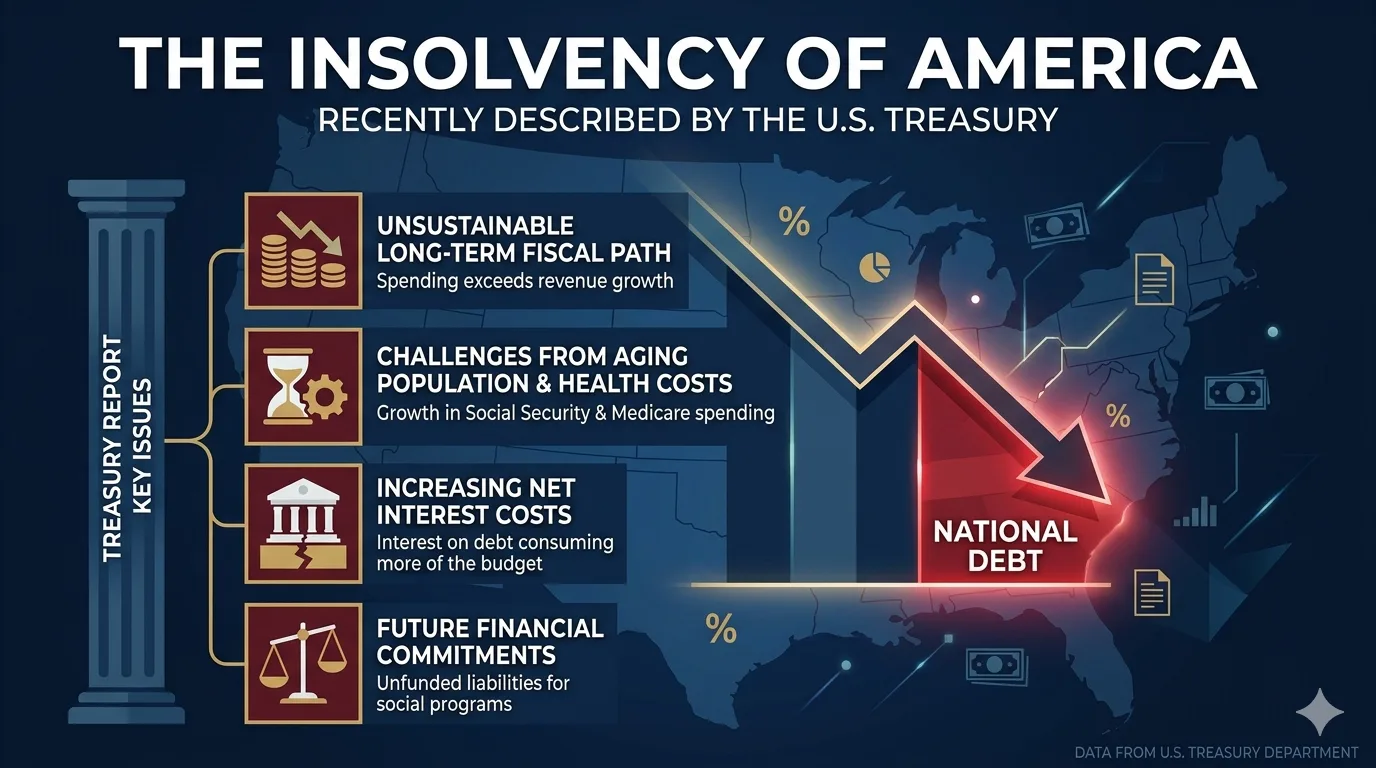
Our teacher, Mr. Palm, was really ahead of his time. He watched PBS because he hated all of the graphics on mainstream media and how they distracted him from the message.
He also told us that the government was approximately $30 trillion in debt to social security because it had been robbed for years as a slush fund for government spending. The result would be that social security wouldn’t be there for us when we retired some 50 years in the future.
The national debt as of today stands at $39 trillion and counting. It adds more than $3 million per minute, or $180 million per hour, or $4.32 billion per day. That’s just the national debt though, which is what’s on our balance sheets.
The number that is never reported is the unfunded debt. Currently, that number is $107 trillion dollars. That, plus the on-the-books debt amounts to $140 trillion in debt.
As of the time of this writing, the US population stands at 348,626,917. Some calculator math says this amounts to $401,575 per person currently in the United States. Median household income is $87,000-$90,000, which breaks down to $43,500-$45,000 per person.
If you purchased a $400,000 home today at the rate of 6.12% interest on a 30-year term, you would pay $27,819 per year. That’s if you made the $80,000 down payment to avoid PMI.
That would put you at a debt-to-income ratio of 62% which would immediately disqualify you from the mortgage for that home. The maximum allowable is 43%, with most lenders preferring 33%.
Even worse, that $45,000 isn’t all yours to spend. Some will be taken for taxes and other obligations. Using the standard 28% of each paycheck going to pay taxes, means you have $32,400 take home.
If you take home $32,400 and $27,819 goes to shelter, that leaves you with $4,581 or $381 per month to eat, turn on the lights, heat your home, get to work, and have running water. Those numbers don’t add up.
I know that was a lot of numbers but it helps to explain that this wouldn’t work in your household either. You budget monthly and if you don’t, you’ll quickly be completely upside down and unable to afford even the basic necessities.
The US Treasury putting these numbers in front of us should make all of us consider current events differently. Are we in the Middle East because we have to control oil since it’s traded in the US dollar which allows us to remain relevant in the global economy?
With this extreme level of debt, we can’t just balance the budget to try to get back in alignment. You wouldn’t in your home either, you would declare bankruptcy and then begin to repair your finances.
So what do we do? The decision is certainly above my pay grade, but we can’t look at the revenue side of this to help. There isn’t enough there. We have to begin cutting back on spending as well. Social programs wouldn’t be off limits in this scenario. But would that be enough?
We could increase revenue and lower expenses, but in the above analogy we would need to double our revenue before our basic expenses are covered.
You see the conundrum facing the government? If this was your household, you would be left with no choice other than bankruptcy.
So, while you didn’t see this on the news anywhere it was reported by the US Treasury. The federal government is broke and insolvent. I don't see a way out unless we get a lifeline from somewhere unexpected. If that comes, it will just delay the inevitable or make the borrower a slave to the lender in the words of the great Dave Ramsey.